

Subrogation Claims Against Home Inspectors
To the ever expanding list of rent seekers that Home Inspectors have to fend off, please add insurance companies that have paid a first-party claim on behalf of a homeowner and then want to recover that payment from the home inspector through subrogation.
Subrogation is a legal concept whereby one party – the subrogee – succeeds to the rights of another – the subrogor – either by operation of law or by contract. The most familiar examples of this concept involve insurance companies that pay losses sustained by policyholders and then seek to recover those payments from tortfeasors that may be legally liable for the policyholder’s loss. The insurance company by virtue of its payment would succeed to the policyholder’s rights against the tortfeasor.
Thus, if an insurance company paid a collision loss on behalf of its policyholder who was not at fault in the accident, it can seek to recover that payment through subrogation from the driver who had actually caused the accident. Health insurance companies and workers compensation insurance companies who pay medical bills on behalf of their insureds will endeavor to recover those outlays from parties who may be legally responsible for causing their insureds’s injuries.
(more…)
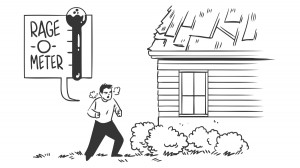 By the time a home inspector contacts me, he or she has already made exhaustive attempts to explain to an irrational client why a leak in a roof six months after it was reported as “near the end of its life expectancy” in an inspection report is not grounds for a claim against the home inspector.
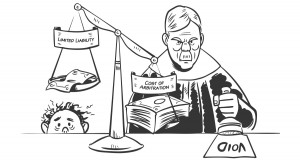 Contract clauses sometimes do not mix well. There is at least one state that will nullify contractual limitation of liability clauses when paired with arbitration clauses. (Do you know which state that is? Let us know on Facebook, Twitter and/or LinkedIn.) And we all know – or should know – that arbitration clauses in pre-inspection agreements are valuable.
 A Connecticut home inspector recently wrote to me about a “finding” he heard at a local law course, in which he has told that the American Arbitration Association (AAA) is now looking at DEFENDANTS for a substantial sum of money when a claim initiates.